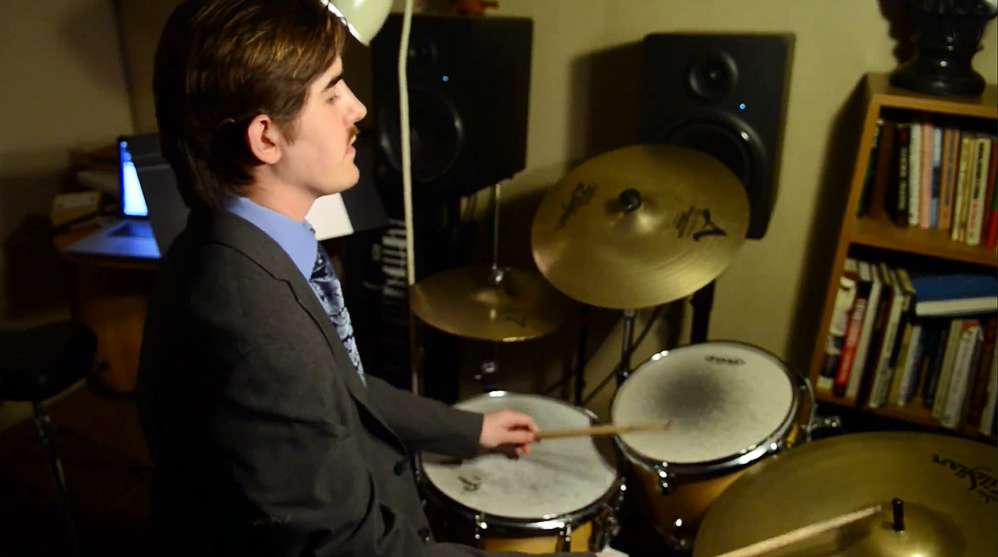
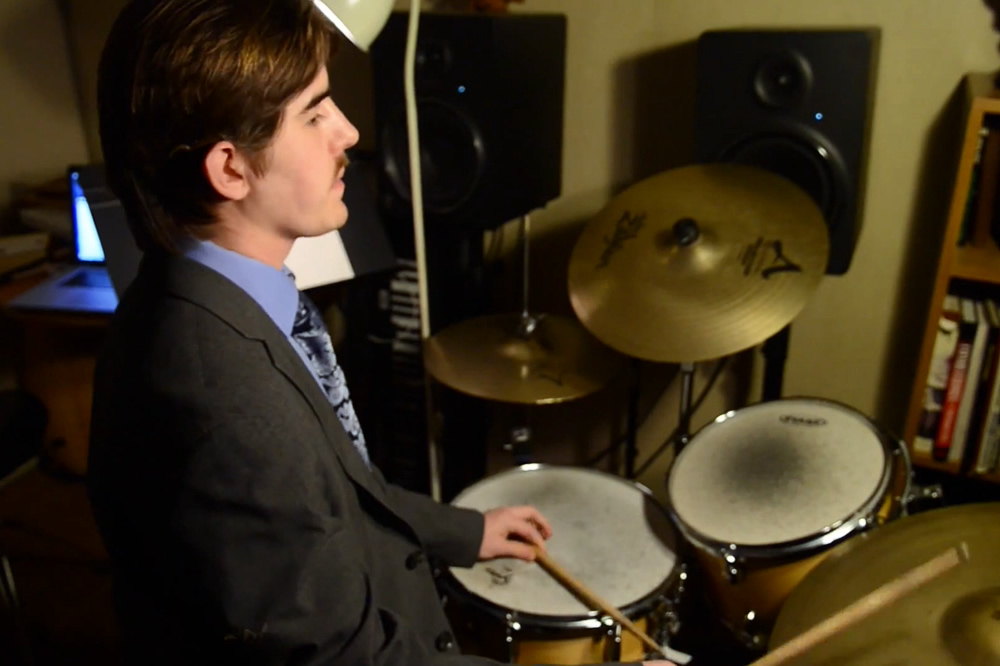
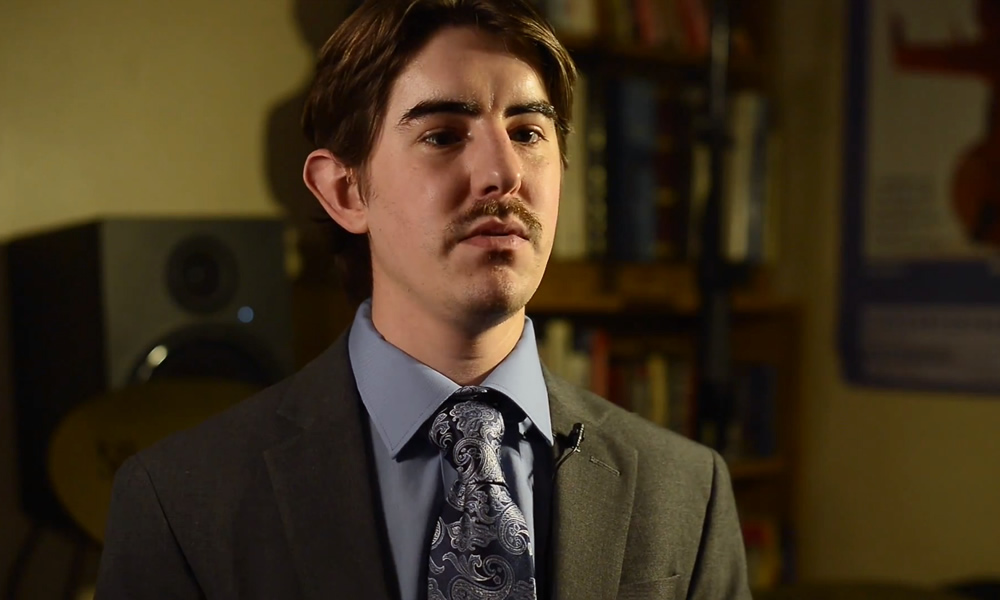
Vaughn Brown is a deaf-blind drummer and percussionist who graduated from the Berkelee College of Music. He earned a bachelor's degree in music with a focus on education and performance. He currently lives in Vancouver and gives percussion lessons.
When Vaughn Brown was six months old, a life-threatening illness left him deaf. At age 4, he started losing his vision due to a genetic condition. Despite those challenges, his family insisted on treating him exactly the same as his brother.
"It is important for families of children with disabilities to look pass the 'can'ts' and encourage the 'cans'," Vaughn Brown said. "Families should let their children do what they want to do. Be what they want to be. I'm independent because I've been exposed to going into public, going to concerts, riding the bus. Life."
Vaughn Brown's family moved from New Orleans to Portland so he could attend Tucker-Maxon School, a private school known for teaching deaf and hearing-impaired students to speak.
But by 1998, Vaughn Brown's sight had worsened. He was reading Braille, using a cane and walking into obstacles. He needed to learn to navigate. His family moved to Vancouver and enrolled him in Washington State School for the Blind.
Although Vaughn Brown started playing the hand drums at age 4 and a drum set at age 10, he says his music education really began at Washington State School for the Blind. During his eight years there, Langley was his music teacher and his private drum instructor. Previously, she had taught at Washington School for the Deaf.
"Jennifer had her master's in classical percussion, she knew music Braille, had taught deaf students and she was very supportive of becoming a musician rather than just being a drummer able to play an instrument," Brown said.
"Being a musician implies that you know the music," Vaughn Brown explained. "It means you understand music theory, harmony, rhythm, melodies and structures within a song. And you’re able to play with other musicians."
Langley taught him to read Braille music. When Vaughn Brown competed at the state solo and ensemble competition, he had to memorize a long piece of music that a sighted person could read.
Vaughn Brown had worn hearing aids until age 3, when he had a cochlear implant put in his right ear. At age 13, that implant failed and he was both deaf and blind for a time. With Langley’s help, he continued playing music.
After his second cochlear implant, Vaughn Brown could hear in both ears for the first time in his life. Today, cochlear implants have restored his hearing to about 90 to 95 percent, he said.
"Even with the cochlears, being a musician can be a challenge," Vaughn Brown said.
At Berklee, Vaughn was aware of a few other blind musicians, but he didn’t meet any other deaf musicians or deaf-blind musicians. The college's music performance and practice spaces had concrete floors, but Brown prefers hollow floors so he can feel the bass or piano when he's playing drums.